Bio
Maria Trzpis
Polish composer, arranger, and performer, currently living in Iceland. A strong voice of the youngest generation of Polish composers, with an individual and distinctive compositional style.
Maria Trzpis completed studies in composition and eurhythmics at the Academy of Music in Gdańsk, studying, among others, in the composition class of Marek Czerniewicz as well as in the Theatre and Film Music Composition class of Paweł Mykietyn and Kamil Cieślik.
Maria’s work includes concert music – solo, chamber, symphonic, and electroacoustic – as well as film, theatre, and video game music.
Works by Maria Trzpis have been presented, among others, at international festivals such as Mundus Cantat and Nowe Fale (ENG: New Waves), as well as during concerts at the Polish Baltic Philharmonic and the Academy of Music in Gdańsk.
Maria Trzpis is a laureate of composition awards,
including for a song to the words of Zbigniew Herbert, and a recipient of scholarships from the Gdańsk Creative Fund, the National Recovery Plan for Culture, and the Rector’s Scholarship for the best students of the Academy of Music in Gdańsk.
In 2025, Maria Trzpis was invited to a composer
residency in Iceland as part of the composer.pl program.
The music of Maria Trzpis is distinguished by emotionality, contrast, and rich texture with colorful instrumentation. She draws inspiration from many sources – from folklore to contemporary compositional
techniques – seeking a bridge between tradition and modernity. The composer continually expands the scope of her interests and is currently exploring connections between sound, movement, and visual arts.
Opinion
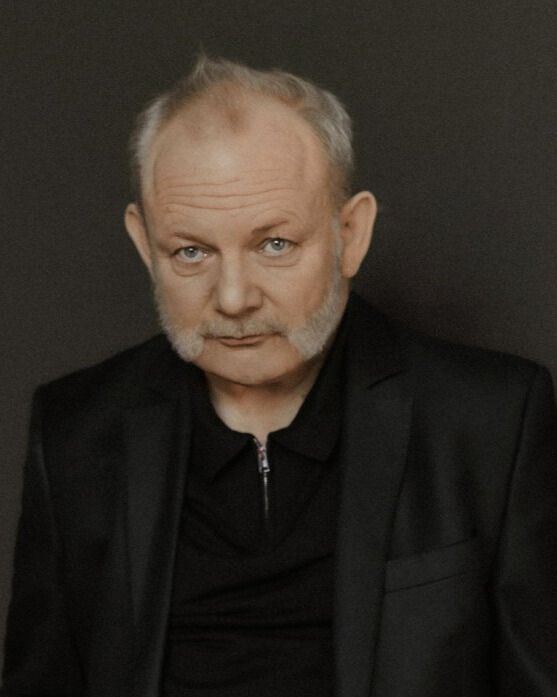
PAWEŁ MYKIETYN
Composer
Maria eagerly seeks new means of expression—both by expanding her harmonic language and utilizing unusual instrumentation, as well as by developing her own sonic solutions and performance techniques.
Read more
What caught my attention from the very beginning and set Maria Trzpis apart was her distinct and recognizable musical idiom, already present in the early stages of her composition studies. This characteristic has developed consistently and remains a vital element of her work.
A significant feature of her output is also her steadfastness in following her own artistic path, without succumbing to fleeting trends or compositional “fashions” [1].
In her work, Maria eagerly seeks new means of expression—both by expanding her harmonic language and utilizing unusual instrumentation, as well as by developing her own sonic solutions and performance techniques. She is an exploratory and experimental composer who finds great freedom and naturalness in working within areas new to her—even when reaching for genres or instruments with which she had no prior experience.
Maria is also characterized by great openness; she explores various musical areas and genres, which testifies to her need for continuous development [1]. This is evident both in her diverse compositions and in the wide range of artistic activities undertaken during and after her studies.
Her close collaboration with performers is also noteworthy—Maria consults on her works at various stages of their creation, paying attention to both the technical possibilities of the instruments and the practical dimensions of performance.
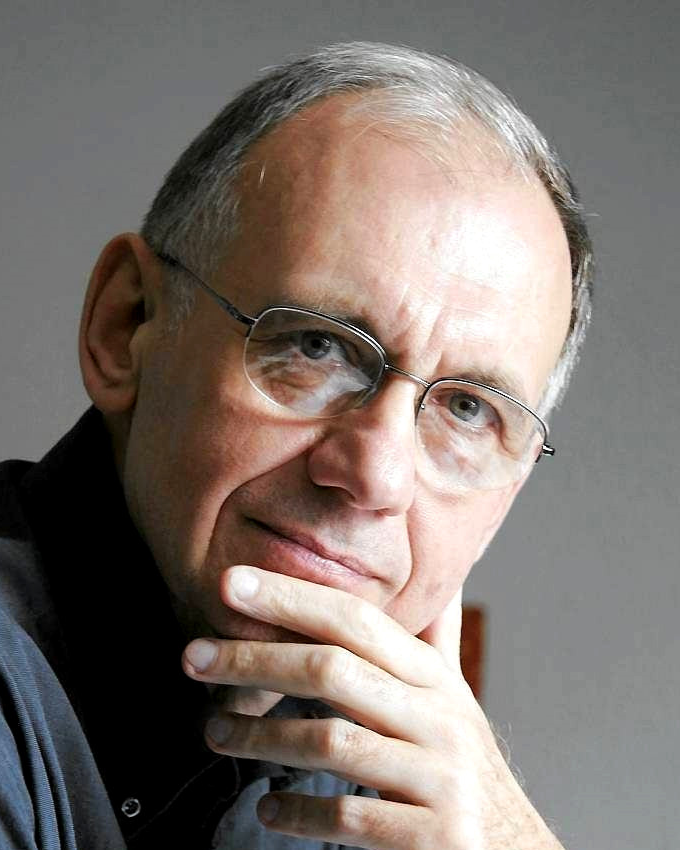
PIOTR MOSS
Composer
Maria approaches composing very seriously. The result is works of profoundly artistic weight.
Read more
What can I say about Maria Trzpis?
We have known each other for some time; I am gradually getting to know her work.
It is fascinating work. Maria approaches composing
very seriously, and the result is works of considerable artistic weight. If she experiments, it is not for the sake
of experimentation itself, but in the name of that
“something” which we all seek in music. Emotion?
Expression? Or perhaps she wants to convey meanings that we do not yet know – meanings known perhaps only to her, or which she herself is still searching for?
I admire in Maria this constant desire for
self-improvement and for deepening her knowledge of
compositional techniques. It is good that she works
with musicians, because they can tell her the most
about the technical possibilities of their instruments. Maria not only explores these possibilities, but also
expands them. Without giving up the desired effect,
she writes nothing against the instrument. This brings
to mind the words of Grażyna Bacewicz, which I heard
during one of my first composition lessons: “Do not
give up what you want to write, but write in such a way that musicians enjoy playing it. Then your music will be performed!”
I wish Maria that the maxim spoken by her older colleague in the profession – knock on wood! – comes true.
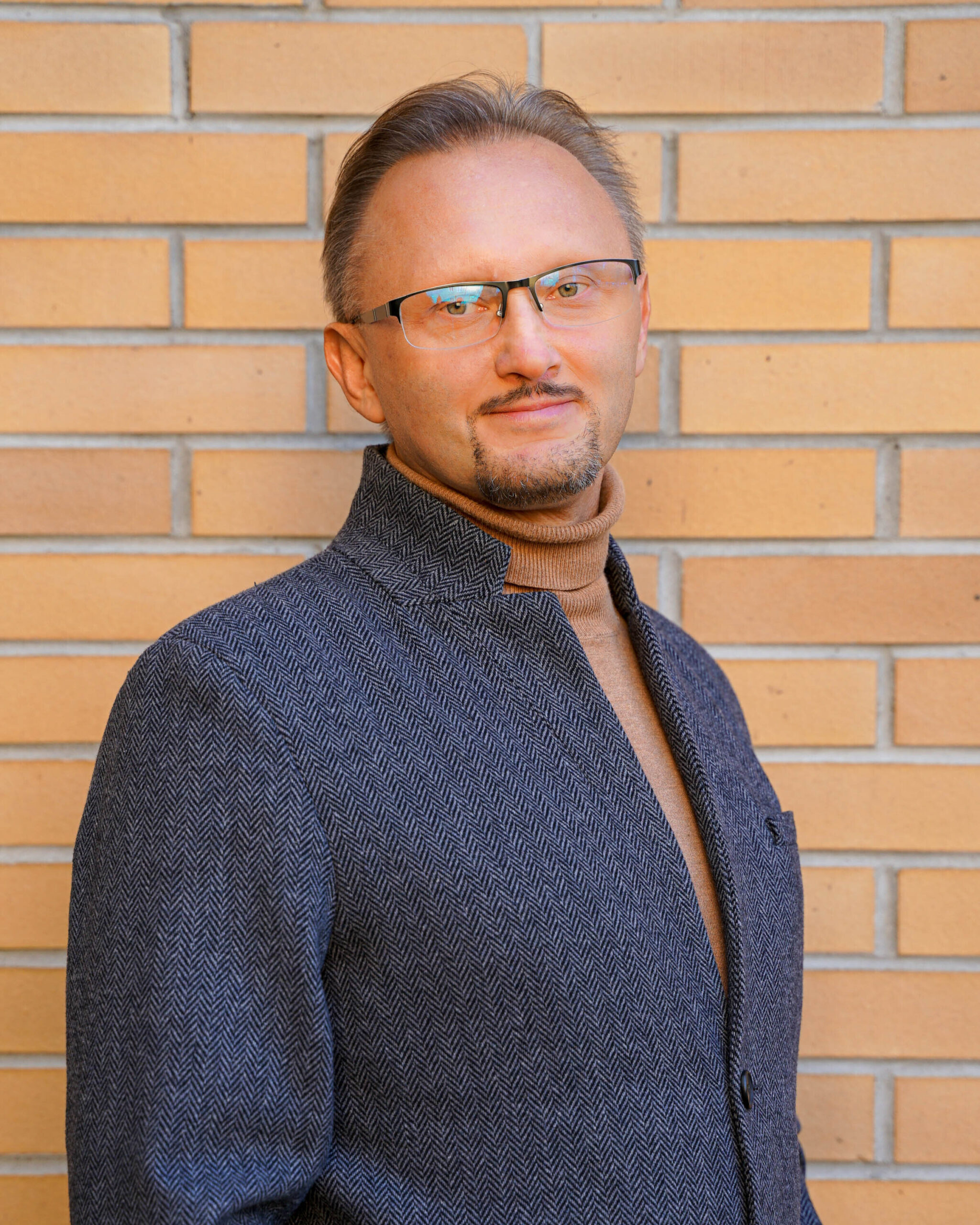
MAREK CZERNIEWICZ
Composer, Pedagogue
The composer’s great technical flexibility allows her to move freely across extremely diverse stylistic and aesthetic areas.
Read more
I have had the exceptional opportunity and pleasure of
observing the work of Maria Trzpis from two different
perspectives – from that of a pedagogue, under whose
guidance a number of her works were created, and
from that of a listener who has attended the vast
majority of their performances.
During our meetings at the Academy of Music in
Gdańsk, I became a witness to the rapid development
of Maria’s compositional talent, her consistency and
determination in pursuing her goals, and her ability to overcome the problems and obstacles that inevitably
arise in a creator’s path.
The compositions of Maria Trzpis never leave me
indifferent; they often intrigue not only through their narrative, developmental dramaturgy, and sonic inventiveness, but also through their deep message, which emerges from a creative gaze directed into the history of art and into her own identity – rooted in classical, folk, and dance music – as well as from her sensitivity to human emotions and to the condition of contemporary culture and civilization.
It is worth emphasizing the composer’s great technical flexibility, which enables her to move freely across extremely diverse stylistic and aesthetic
areas-something that is particularly evident in her
compositions created within the field of film music.
I look forward with impatience to Maria’s next works, being deeply convinced that they will once again move me, draw me in, surprise me, and at the same time inspire me.
MICHAŁ KOZORYS
Conductor, Pedagogue
The interpretation of the “Mass-an” especially interesting work due to its formal structure, harmony, and rhythm-developed through a dialogue between the musical notation and the realities of performance, which made it possible to achieve a coherent and convincing artistic shape of the world premiere.
Read more
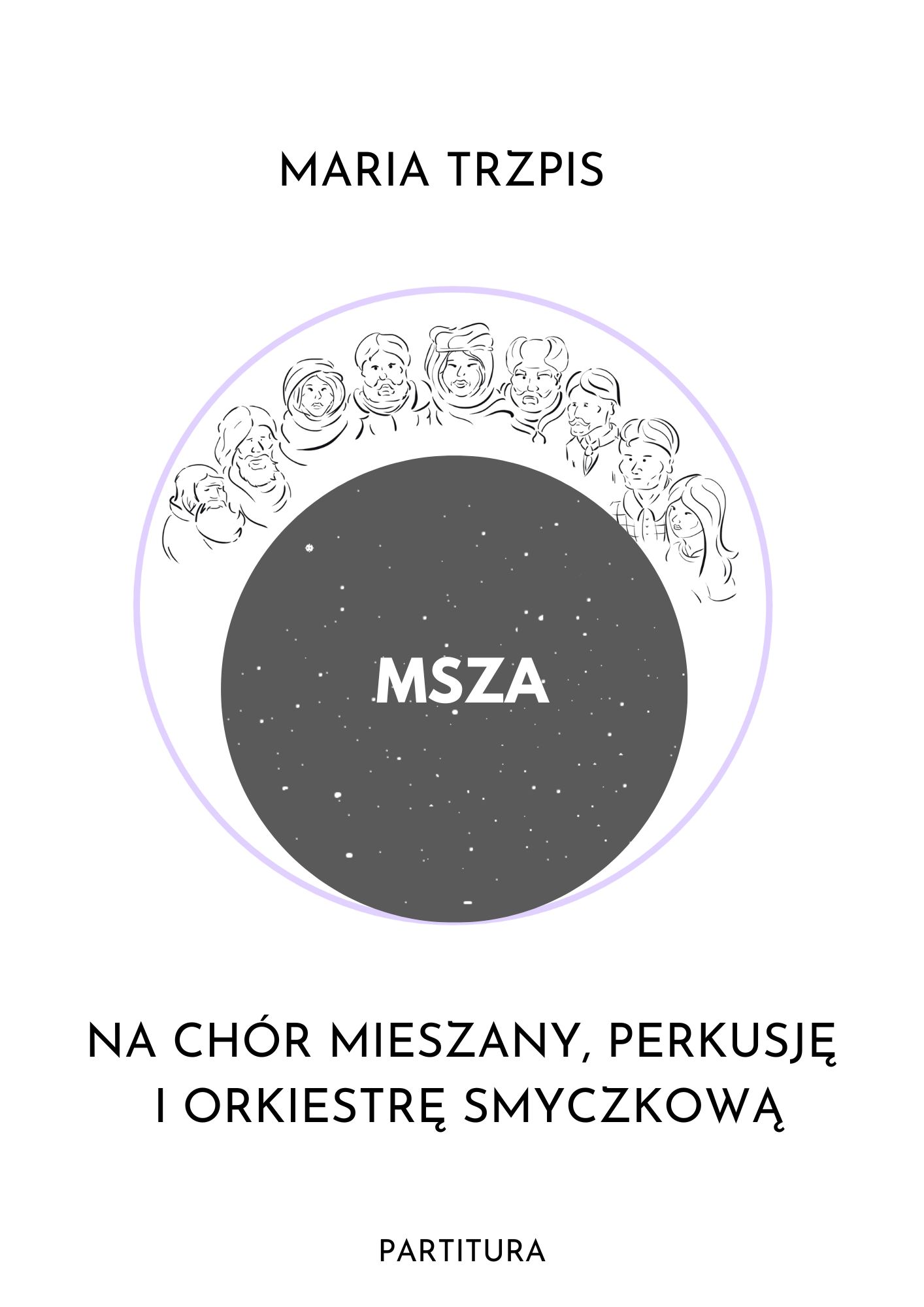
I had the pleasure of conducting the world premiere of the Mass for mixed choir, percussion, and string orchestra by Maria Trzpis in May 2024.
While working on the score, particularly during the preparation of the choir, I consulted certain issues with the composer; we made minor corrections to the musical text, and the author received my remarks with enthusiasm and humility. She was open to practical comments resulting from work with the performing ensemble, while at the same time precisely explaining her compositional intentions. As a result, the interpretation of the Mass-an especially interesting work due to its formal structure, harmony, and rhythm – developed through a dialogue between the musical
notation and the realities of performance, which made
it possible to achieve a coherent and convincing
artistic shape of the world premiere.
Foundation Mundus Cantat
We witnessed a performance of a work that evoked a wide range of emotions - from contemplation, solace, and a sense of the sacred, through tension, anticipation, admiration, and euphoria, to a feeling of relief, calm, and light in the Finale.
Read more
The presentation of the Mass for mixed choir, percussion, and string orchestra by Maria Trzpis at the 20th International Choral Festival Mundus Cantat in Sopot (May 2024) was met with a very positive and enthusiastic reception.
We witnessed a performance of a work that evoked diverse emotions – from contemplation, solace, and a sense of the sacred, through tension, anticipation, admiration, and euphoria, and in the Finale we felt relief, calm, and light.
Listening to this Mass, audiences experienced a combination that is rare in contemporary music: traditional spirituality joined with modern energy.
The composer demonstrated an excellent command of choral technique and an ability to use the percussion section in a colorful and imaginative way, which, combined with the string orchestra, created a work of unique texture.
The cooperation with Ms. Maria during the preparation stage for the world premiere proceeded flawlessly. Her openness to performance- and organization-related suggestions, while simultaneously maintaining her own artistic vision, is a testament to a high professional work culture.
The work presented in Sopot was enthusiastically received by both critics and the international audience, becoming one of the pillars of the festival program.
Thank you.
Interviews
Polish Radio Programme Two, Nowa Polska (ENG: New Poland) programme:
Maria Trzpis and the Field of Sonic Possibilities, hosted by: Ewa Szczecińska
Presto magazine:
What If Mozart Were Brought into Our Times? (an interview with composer Maria Trzpis), hosted by: Władysław Rokiciński
ZAiKS Quarterly:
Why Are Composers Afraid of TikTok?, interview hosted by Aleksandra Chmielewska
Selected scores